
Understanding g5.7.9.zihollkoc
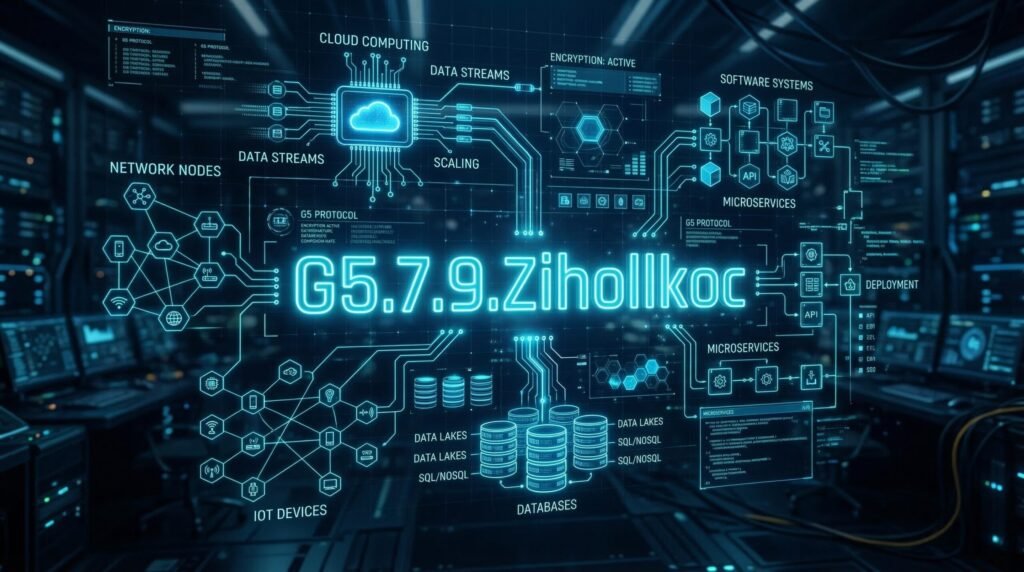
The term g5.7.9.zihollkoc has emerged as a significant identifier within specific technological and scientific domains. It refers to a classification that encapsulates various aspects of system architecture and data management. At its core, g5.7.9.zihollkoc represents a framework designed to optimize operational efficiency and enhance user experience through streamlined processes and robust resource allocation.
Originating as a response to the evolving needs of digital infrastructure, g5.7.9.zihollkoc integrates contemporary methodologies, including data analytics and machine learning principles. This evolution is critical, as it reflects a growing demand for practices that support advanced computational capabilities and data handling in complex environments.
The classification of g5.7.9.zihollkoc encompasses several key characteristics, including modular design, interoperability with existing systems, and scalability. Modularity allows for flexibility and ease of integration, thus accommodating future expansions or modifications without extensive reconfiguration. Interoperability ensures that g5.7.9.zihollkoc can effectively work alongside other systems, maximizing the utility of existing technologies. Scalability, on the other hand, enables organizations to adapt their infrastructures in response to increasing demands, fostering long-term sustainability and growth.
In summary, g5.7.9.zihollkoc operates within a framework that emphasizes efficiency, adaptability, and advanced technological integration. Understanding its definition and characteristics is fundamental for stakeholders and individuals keen to navigate the complexities of current digital solutions.
Applications and Use Cases of g5.7.9.zihollkoc
The integration of g5.7.9.zihollkoc across diverse industries showcases its versatility and efficiency. Various sectors have utilized this technology to streamline operations, enhance customer engagement, and increase productivity. One prominent application can be found in the healthcare industry, where g5.7.9.zihollkoc enables the seamless exchange of vital patient information among medical professionals. This capability enhances decision-making processes, leading to improved patient outcomes while maintaining compliance with regulations.
Another notable use case of g5.7.9.zihollkoc is in the field of finance. Financial institutions have adopted this technology to facilitate secure transactions and protect sensitive customer data. By utilizing g5.7.9.zihollkoc, banks can monitor transactions in real-time, detecting fraud and ensuring compliance with financial regulations. This enhances client trust and optimizes operational efficiency.
The manufacturing sector also benefits significantly from g5.7.9.zihollkoc. By implementing this technology, companies can automate production lines, reducing waste and improving overall efficiency. For instance, a leading automobile manufacturer integrated g5.7.9.zihollkoc into its supply chain, enabling real-time tracking of components and inventory. This resulted in a substantial decrease in production downtime and increased responsiveness to market demands.
Moreover, the retail industry has seen transformative effects from the use of g5.7.9.zihollkoc. Retailers leverage this technology for personalized marketing strategies, using customer data to tailor promotions effectively. This not only enhances customer satisfaction but also drives sales. Consumers are more likely to engage with brands that anticipate their needs based on previous shopping behaviors.
In summary, g5.7.9.zihollkoc proves to be a pivotal technology across various sectors, driving innovation and enhancing operational efficiencies. The aforementioned examples illustrate its practicality and the positive outcomes that stem from its implementation, underscoring the necessity for businesses to consider its adoption.
Challenges and Considerations Surrounding g5.7.9.zihollkoc
The exploration of g5.7.9.zihollkoc presents a range of challenges and considerations that cannot be overlooked. One of the primary concerns pertains to the implementation of this system in various contexts, where differences in infrastructure and resources may pose significant barriers. For many organizations, adapting to the complexities of g5.7.9.zihollkoc requires robust management strategies to effectively integrate the technology into existing processes.
Limitations are also a crucial factor when considering g5.7.9.zihollkoc. While the theoretical frameworks and applications suggest considerable benefits, practical experiences may reveal shortcomings that impact efficiency and functionality. These limitations can lead to hesitance among stakeholders and decision-makers who may doubt whether the potential advantages outweigh the inherent risks.
Furthermore, discussions surrounding g5.7.9.zihollkoc often trigger debates and controversies. Different perspectives about its efficacy and ethical implications can lead to polarizing opinions within the industry. Critics may highlight the environmental impact or the socioeconomic disparities that arise from the implementation of g5.7.9.zihollkoc, calling for greater scrutiny and regulation. Advocates, on the other hand, emphasize the transformative potential that such technology holds for driving innovation and progress.
In light of these challenges, it becomes imperative for stakeholders to engage in informed dialogue about g5.7.9.zihollkoc. By considering all viewpoints and encouraging comprehensive discussions, a more nuanced understanding can emerge that may guide future developments and applications effectively. Balancing the benefits against potential drawbacks is key to optimizing the outcomes of g5.7.9.zihollkoc while ensuring broader acceptance and integration into various sectors.
The Future of g5.7.9.zihollkoc
The future landscape surrounding g5.7.9.zihollkoc promises to be a dynamic one, characterized by rapid technological advancements and innovative applications. As research and development in this domain continue to push boundaries, we can anticipate a significant enhancement in its capabilities. The integration of artificial intelligence and machine learning with g5.7.9.zihollkoc is likely to foster more intelligent systems that can learn from and adapt to their environments, thus increasing efficiency across various sectors.
Moreover, with the proliferation of the Internet of Things (IoT), the relevance of g5.7.9.zihollkoc will only expand. By serving as a foundational element in interconnected devices, g5.7.9.zihollkoc could facilitate seamless communication among diverse systems, leading to smarter resource allocation and improved decision-making processes. Industries like healthcare, finance, and transportation may leverage g5.7.9.zihollkoc to create more responsive and efficient services.
Potential innovations may also involve the evolution of g5.7.9.zihollkoc into more user-friendly formats. Accessibility may become a priority, enabling broader demographic engagement and participation. As developers strive to refine g5.7.9.zihollkoc, we could see new applications emerge that cater to specific user needs, resulting in a tailored experience for individuals and organizations alike.
Furthermore, as global attention shifts towards sustainability, g5.7.9.zihollkoc might play a crucial role in promoting eco-friendly practices. Its potential to streamline processes and reduce waste will be vital in helping industries transition toward greener solutions. In this evolving scenario, stakeholders must remain adaptable and ready to harness the opportunities presented by g5.7.9.zihollkoc.